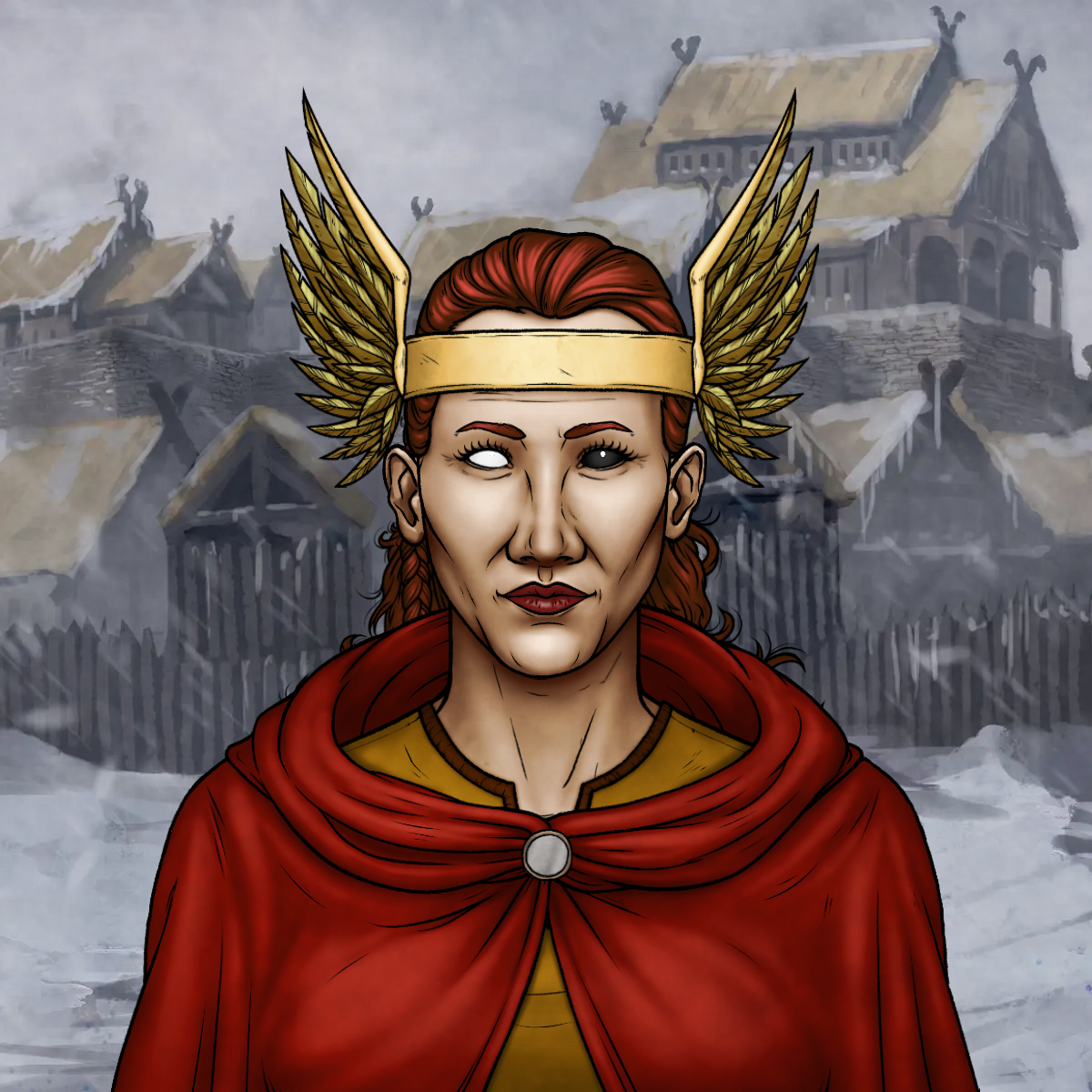
Nicodemus

Birth: 1475 AGF
Death: 1620 AGF
Shard Type: Majorus
Nicodemus, like many Godshards throughout history is a divisive figure. To the Sacerdozio and Adamite Godshards, he was a shrewd, manipulative man who saw an opportunity and grabbed power. Capitalizing on the division in his world to his own ends. The Seerhood Godshards on the other hand view him as a courageous man who took a stand against the corruption of his Sacerdozio, someone who brought the Godshards back to their roots with purity of purpose.
If something is a lie but everyone believes it, is it still a lie? Nicodemus was an ambitious man, he had major dreams and aspirations to become the next Sommo Sacerdote and desperately tried to get into Luke's good graces. But Luke felt threatened by him instead, so as a 'reward' for his loyalty, he was given a post in the north. Nicodemus, like many other Sacerdozio Godshards at the time, saw the north as career suicide. To be assigned there was career murder. The north was a thankless place, the people constantly clashed with the Sacerdozio over differing beliefs and values. Attacks by Maelim and Leviathans were depressingly common and most of the year was distressingly cold.
An embittered Nicodemus saw no way out. A man of better virtue would have simply done his job as befits the Sacerdozio but like many in the organization at this hour, he cared more about his own wealth, status and power. But Nicodemus was calculating and cunning and he saw an opportunity. The people hated the corruption and the Sacerdozio, maybe if he said what they wanted to hear, maybe he could create something new here instead. The process was slow and gradual. He started preaching against the wrongs of his own organization, outwardly condemning the bribery and corruption within it. Over time this worked and the locals viewed him favorably, he had become the one good Godshard in the Sacerdozio.
It was a start but Nicodemus had to go further. He had a meeting with the northern druids. Before the Sacerdozio took over, it was these men and women who were the spiritual leaders. They were middle men between the northern kingdoms and the angyls. For centuries in times of great peril, the druids had summoned them via tomes and angylic rites. Nicodemus pretended to be a man seeking the truths that the Sacerdozio is 'suppressing'. He promised they'd get their temples back if the druids introduced Nicodemus to angylic worship. Soon Nicodemus' rhetoric changed into disdain for the Sacerdozio as a whole, and not just its flaws.
Many of the northern Godshards initially called him a heretic and liar. But as the people supported Nicodemus more and more, they flipped their stance and joined him. Nicodemus made absurd claims, most not having any real basis or evidence, but validated the people's beliefs all the same. Claims that Adam supported angyl worship, that he wrote down prophecies given to him by the hosts at the end of his life. That he believed in the idea of a Seerhood. Supposed proof was easily proven to be fabricated by actual experts, but if enough people believe it, does it even matter?
What proved to be the final nail in the coffin was the outbreak of the Twisted War. When Horrorlim, and other mutated monsters attacked the North, it was Nicodemus who saved the day, summoning angyls through a combination of the druidic teachings and his own power as a Godshard. The angyls approved of his veneration and endorsed the idea of a Seerhood. It is unlikely they were fooled by Nicodemus' lies, so the reason why they supported him is unknown. Perhaps they saw him as the future and as a Godshard, a more useful pawn than the druids. Angyls are farsighted and perhaps they knew of Simon the Devoted a century later. The Seerhood was created, overtaking all the Sacerdozio holdings in the north. Those Godshards who refused to join were ousted or imprisoned. This new organization held a similar idea to the Twin Path, just with Oracles and Seers instead of Sacerdoti and Maghi.
Nicodemus placed himself as the leader of this new order, at long last he had considerable power. Despite his public stance against corruption, bribery and favors remained a common blight, only this time anyone who criticized the Seerhood for this was imprisoned and quietly killed. Nicodemus was a man of contradictions. One minute, he'd frame himself as a helpless victim under attack from the Sacerdozio. The next he boasted about his greatness, of being a true Godshard in the spirit of Adam. He could do whatever he wanted, the blind devotion of the masses was secure, and critical thinking was looked down upon.
The druids, having outlived their usefulness were betrayed and when they called out Nicodemus, he turned the people against them. He called them treacherous devious people who sought to manipulate the others to grab power, no better than the Sacerdozio. They were executed soon after, murdered by the very people they sought to protect, their centuries of service meant nothing. Through countless heresies such as these, Nicodemus twisted and corrupted the northern values more than any Sacerdozio Godshard. But instead of revulsion they cheered him on. All because they trusted Nicodemus, they believed his con.
Years after the rise of the Seerhood, the new Sommo Sacerdote, a quiet man named Samuel arranged a meeting with Nicodemus over the possiblity of reintegrating into the Sacerdozio. Samuel had reformed and purged much of the corruption in his organization. For unlike Nicodemus, Samuel wanted to truly fix his world, Nicodemus just wanted power. When they met, Nicodemus went on and on about the wrongs of the Sacerdozio, while Samuel himself was eerily silent. After minutes of ranting, Samuel at last spoke, codifying the Seerhood on the spot. Not because he believed in it and Samuel made it clear how much he hated Nicodemus and chewed him out for his hypocrisy. The reason why Samuel codified the Seerhood was to prevent it's poison and corruption from reinfecting the Sacerdozio.
Drunk on power, Nicodemus turned his attention to the northern kings. Nicodemus long sought cooperation with the monarchs, not unlike the druids. An arrangement had been struck shortly after the Seerhood was founded. It appeared that Nicodemus was backing out of his part, and started preaching against the wrongs of the royals. The High King at that hour was Richard the Strong. His original kingdom was the Northernmost Realm and he was accustomed to threats. He witnessed the fate of the druids and realized Nicodemus planned to betray them too.
He called for a meeting with the other kings. He wanted to oust Nicodemus by force. But an unexpected ally proposed a different solution. The former Sacerdote Jeramiah proposed a two-fold plan. First step was passing reforms, as a form of malicious compliance. Second step would be the creation of a secret police that would ‘keep an eye on the kings’. A branch of government that would answer to the kingdom, not the Seerhood.
Richard and the others reluctantly agreed and the decivise action curbed Nicodemus’ ambitions. He couldn’t overstep without validating Jeramiah’s ‘slander.’ However, even with this new check on his power Nicodemus reigned supreme. Even with the secret police watching him, he was untouchable. When he passed away, he was viewed as a hero in the spirit of the Godshards of old, even though he was anything but.
The tragic irony is the Seerhood would go on to be more legitimate than what was originally intended. Especially after the life of Simon the Devoted, most of the present day Seerhood Godshards are true believers of angylic worship and veneration. Corruption is still rampant but much less than it was during Nicodemus' time. Dissent is still highly frowned upon and many Seerhood Godshards relish in their power, but they are still firm believers of their creeds.
It is quite vexing and strange how an entire organization can be based on a lie.
Svetlanna